>>> Discober all of Lluci Juan’s work related to DANA<<<
“Because there are so many, so very many dead. There have never been so many dead in your land.
And you think of that five-year-old boy found by a dog near a highway.
The little body lying still under the water, the animal’s restless snout, a horrible bark,
the most horrible you can imagine. It is painful to go into detail.
But life is in the tiny details. And that detail won’t leave your mind.
His restless little body and a dog sniffing it.”
Paco Cerdà, Cancó de bressol. Renàixer del fang.
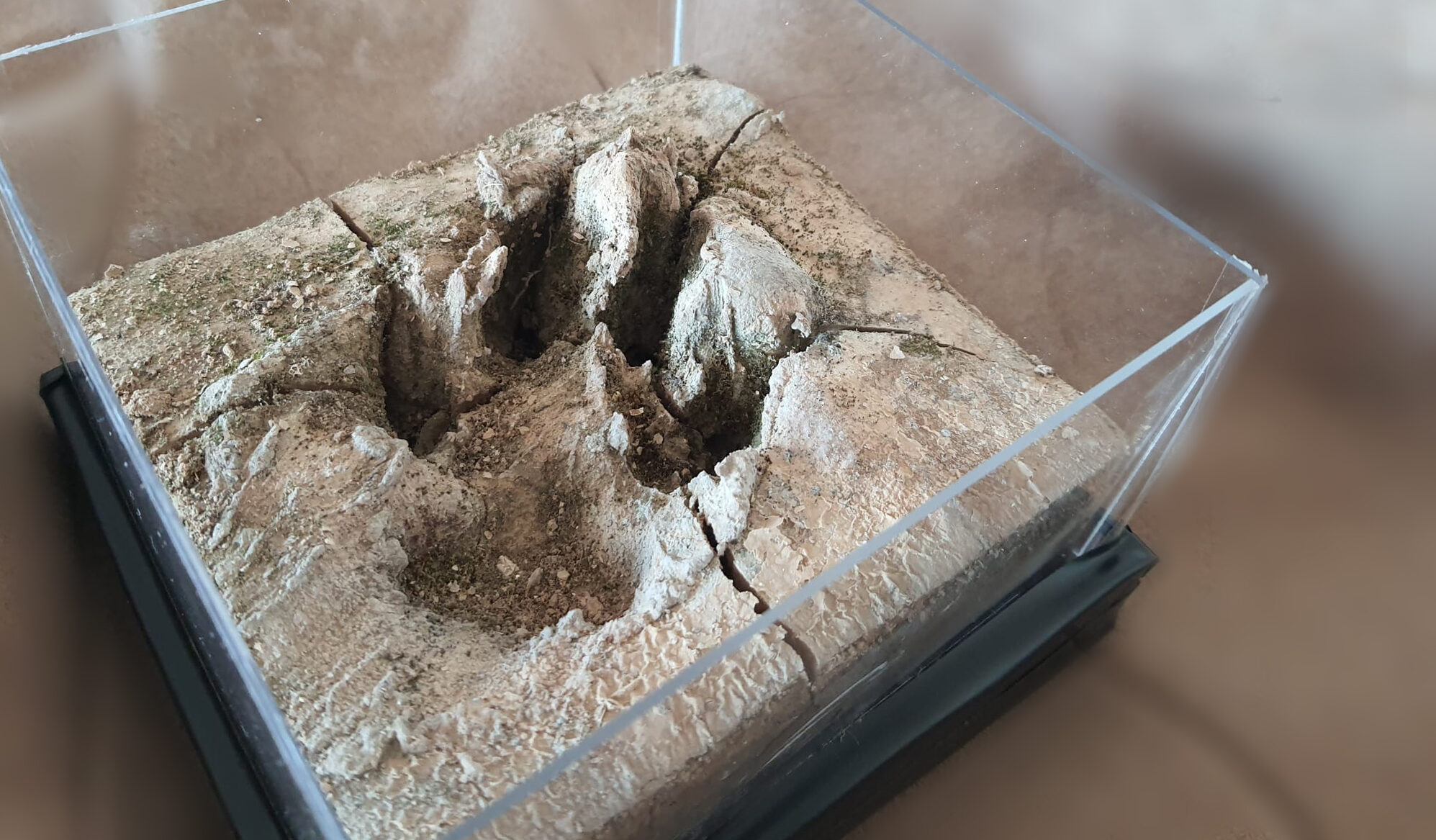
Petjades Paiporta, 14x14cm, Noviembre 2024.
In the days and weeks following the DANA of October 29, 2024 in Valencia, more than 23,000 volunteers mobilized to carry out cleanup efforts, sort donated materials, and distribute food. Beyond human and material resources, dogs played a vital role in the search for missing persons and the recovery of bodies.
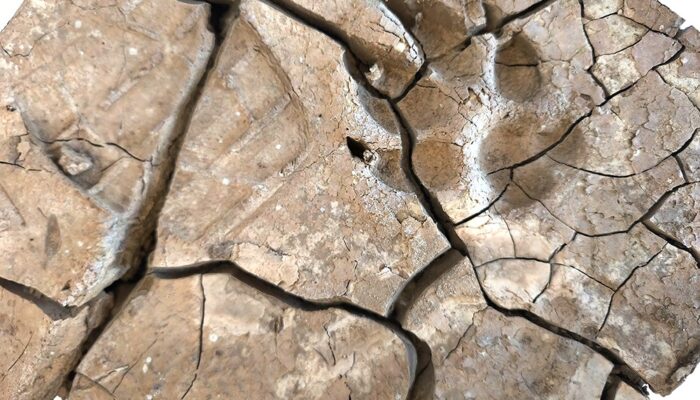
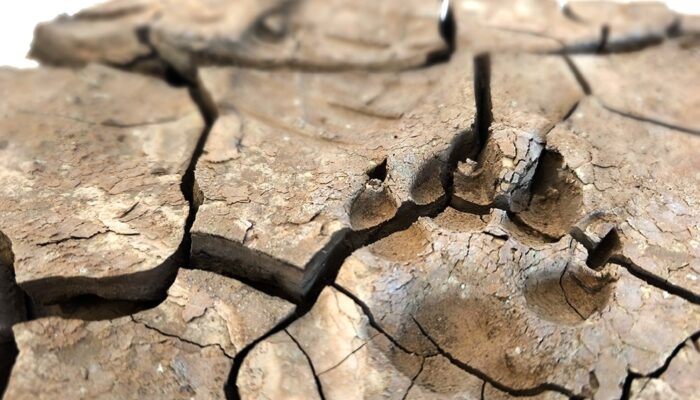
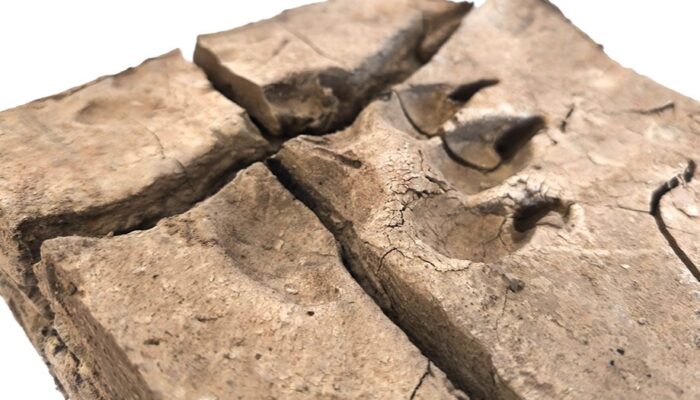
Lluci Juan, due to her personal connection to this territory, has preserved clay pieces left behind by the flood, marked with the footprints of the dogs that searched for victims and missing persons in Paiporta—considered ground zero of the DANA. These prints, over twelve in total, are tangible and unrepeatable testimonies of the lived tragedy, reflecting the distinctive qualities of Lluci Juan’s work: the union of art and life, the bond with territory, and the capture of the soil’s morphology, transforming each piece into a poetic and aesthetic metaphor.
These works are square in format, with dimensions ranging from 32×32 cm to 14×14 cm, and all have a height of approximately 6 cm. They are currently undergoing study and consolidation processes. After several failed attempts at ceramic firing and reinforcement using sodium silicate and colloidal silica, new stabilization techniques are being explored, based on methods from the field of cultural heritage restoration and conservation.
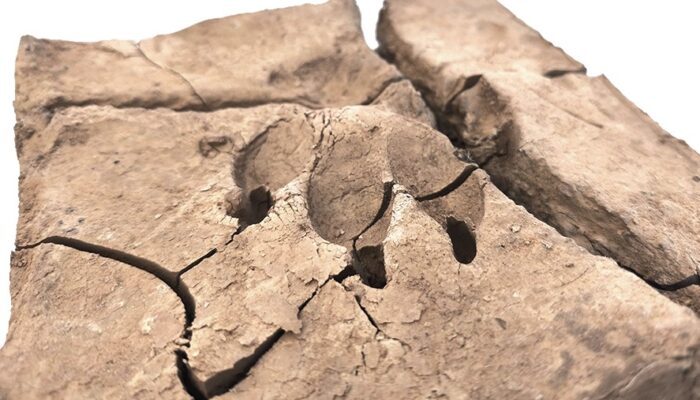
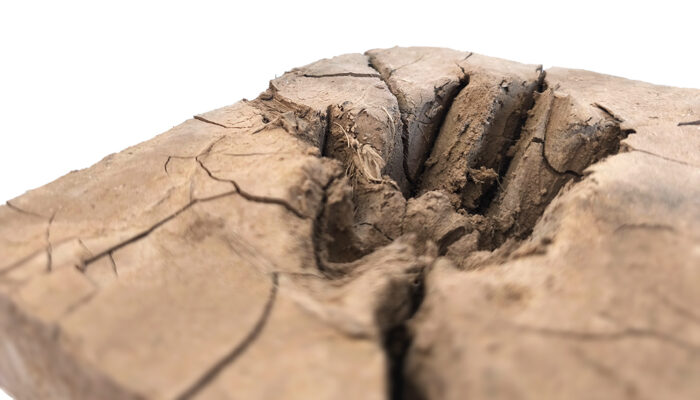
Investigació per a la consolidació de les peces:
After several failed ceramic firing attempts, the project led to a new line of research focused on stabilization techniques based on methods from the field of cultural heritage restoration and conservation.
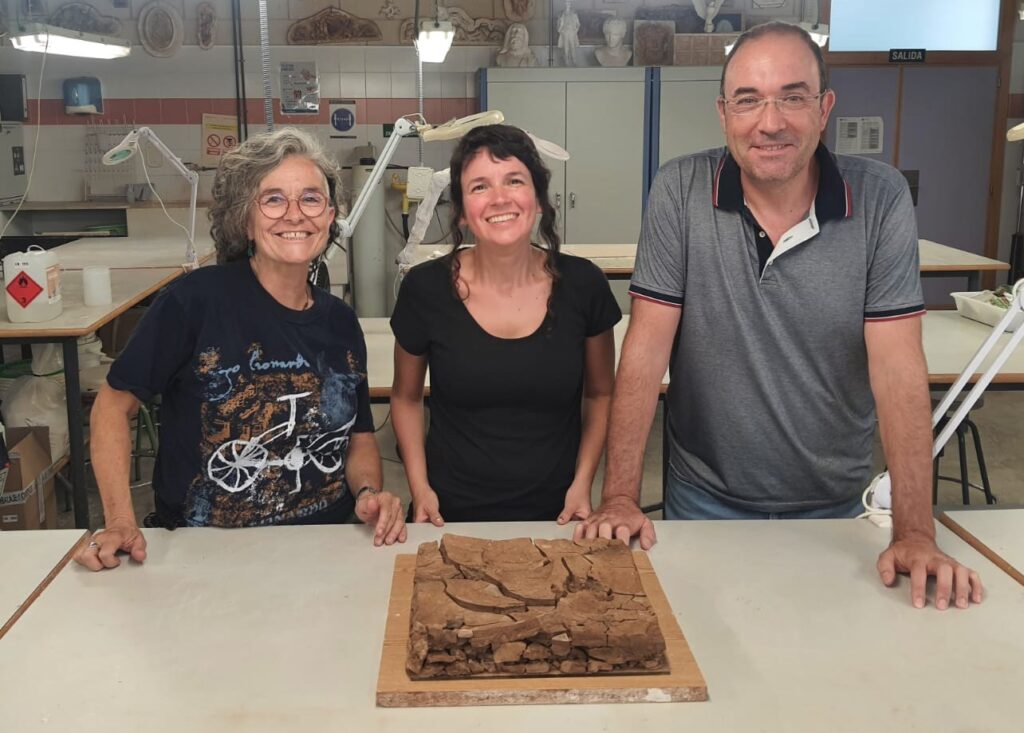
Drawing on the expertise of specialists in sculpture and restoration, Dr. Xavier Mas-Barberà (PhD in Fine Arts, expert in the conservation of porous inorganic materials, Institute of Heritage Restoration, UPV) and Dr. Carmen Marcos (PhD in Fine Arts, researcher with the IDM group, Department of Sculpture, UPV) carried out a decisive study to find a solution, implementing a consolidation process to recover the intrinsic properties of the material.
More information.
Contexto personal y situación geográfica:
These pieces were recovered from a plot of land in Paiporta located 65 meters from the Poio ravine, where the warehouse that was Lluci Juan’s workshop and storage space for his works is located. This space became material evidence of the catastrophe, highlighting the relationship between life and creation, the fragility of the environment, and the resilience of artistic practice in the face of devastation. Learn more about Lluci Juan’s relationship with this space.
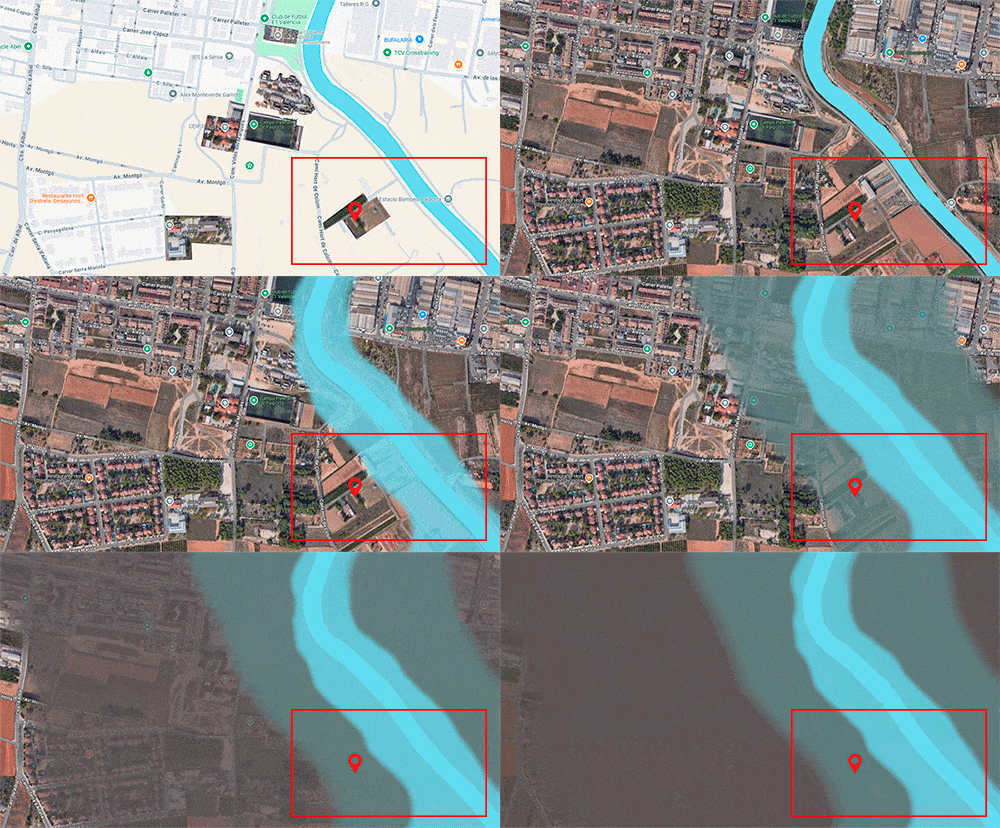
Location of the plot and nearest buildings in Paiporta.
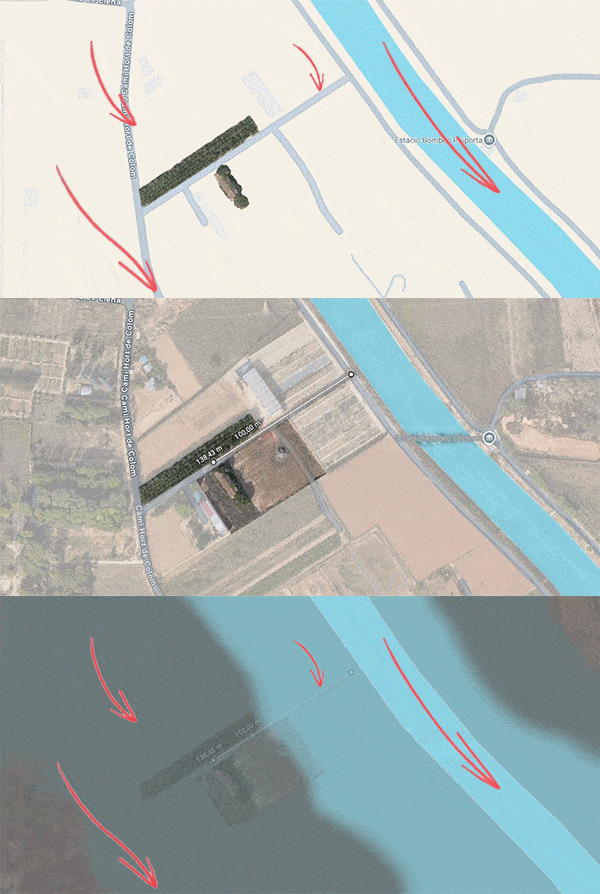
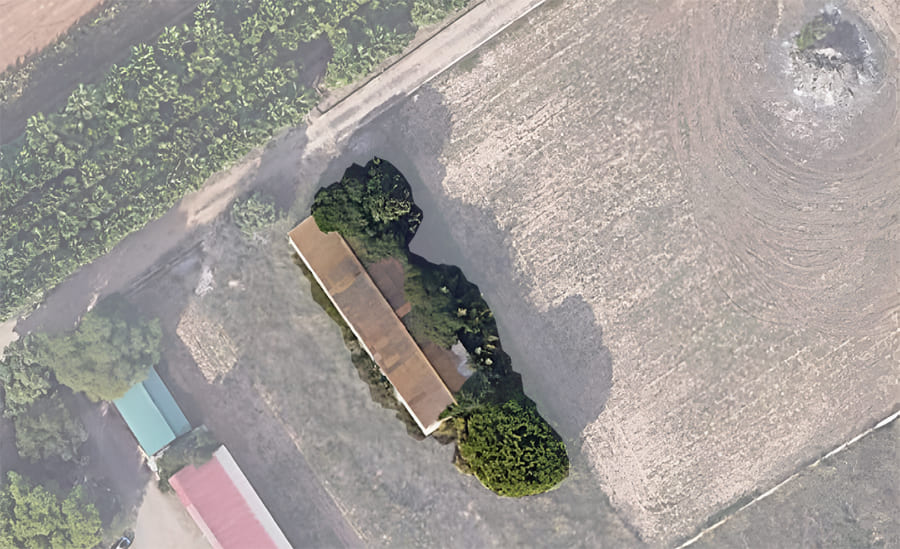
Location of the plot and the warehouse.
We would like to thank Sofcar and Tecnam for their collaboration in this phase of the project.