(Genealogias del territorio)
“Genealogies of the Territory” is a group exhibition featuring 60 artists whose studios were affected by the DANA storm at the Carme Center for Contemporary Culture.
It offers a journey through sediments, memories, and changing landscapes, reflecting on the fragility of the territory in the context of the climate emergency.
Curator: Alejandro Villar Torres.
Curatorial team: Rebeca Fernández del Campo and Alba Bueno Colomer.
Herreras Hall at the CCCC, May 15–July 1, 2026.
“This episode (the DANA) is not presented as a disaster narrative, but rather as a threshold: a turning point from which the territory reveals itself in all its complexity—as a layering of memories, a sedimentation of experiences, and a web of material and cultural relationships.
The territory ceases to be a backdrop and asserts itself as an active structure. Earth, water, and sediments form a living system where nature is not merely contemplated but acts, overflows, and redefines the boundaries between the human and the environmental.
Through a plurality of languages, the exhibition proposes a journey that moves from the dreamlike to the material and from the physical to the spiritual.
- Earth and Dream. The journey begins in the realm of the sensory and the dreamlike, where earth and water appear as origin and matter. Nature is presented as a space of beauty and threat, where love and death coexist.
- Sediments of Memory. The DANA manifests as a threshold that reveals an archaeology of survival. Clay, residue, and fragments become the material of memory and reconstruction.
- Landscape: A Way of Living. The landscape is affirmed as a physical and relational experience. Artistic practice connects with the environment through materials and technology, generating new ways of interpreting the territory.
- The beauty we can still bear. The journey delves into the inner landscape. Ruin becomes a contemporary condition, where fragmentation and loss give rise to processes of recomposition.
- Light and silence. The itinerary concludes in a space of openness and transcendence. After ruin, possibility emerges: reunion, fusion, contemplation.”
Exhibition brochure: Genealogies of the Territory.
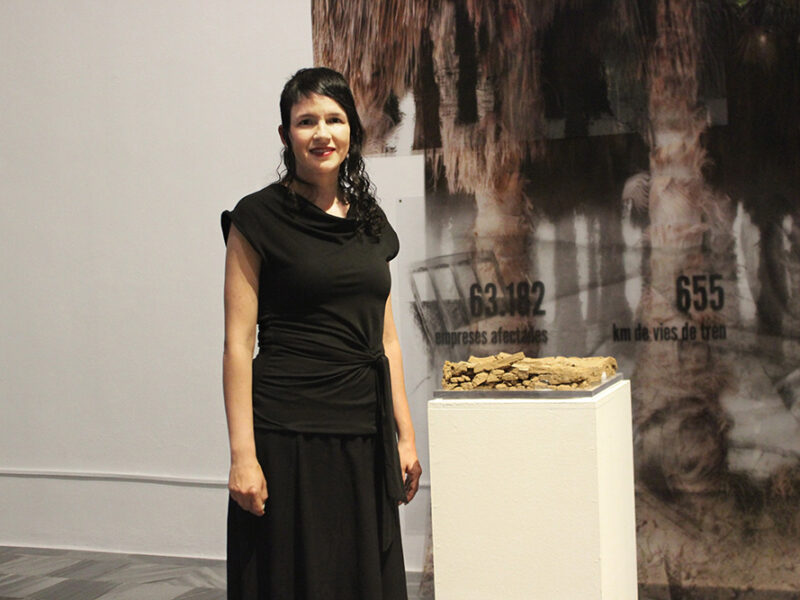
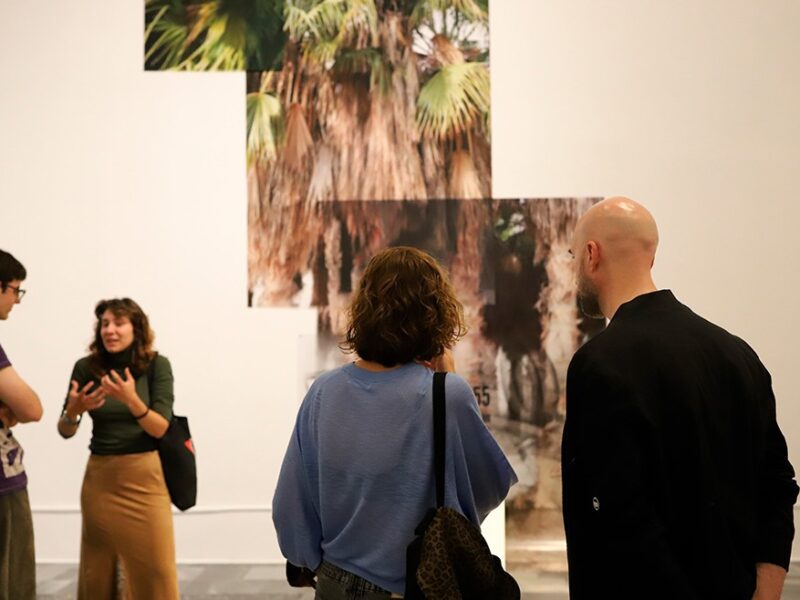
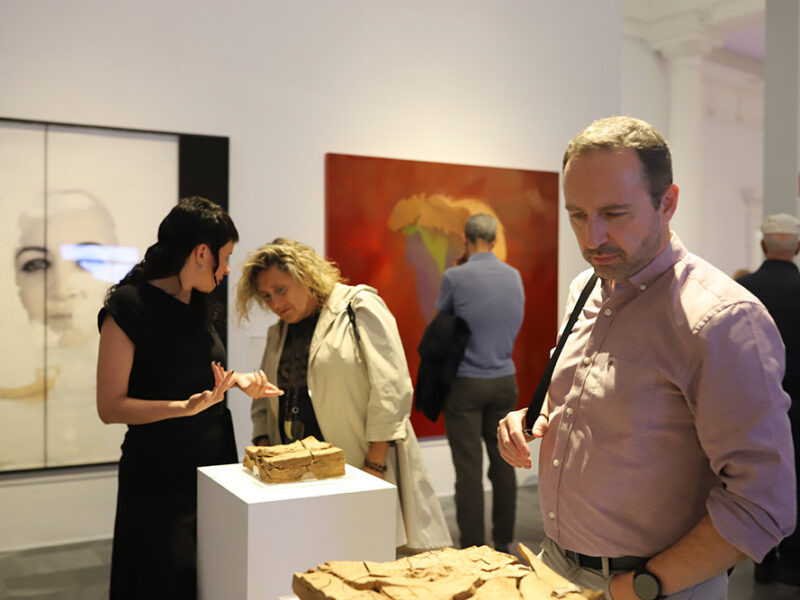
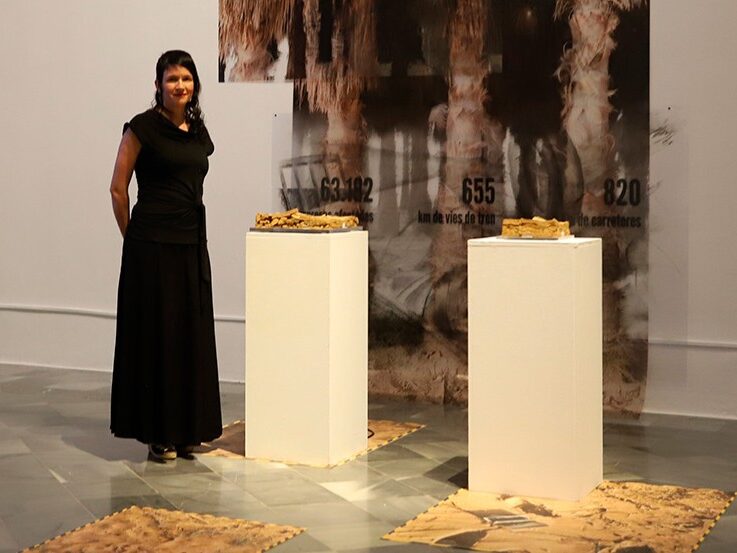
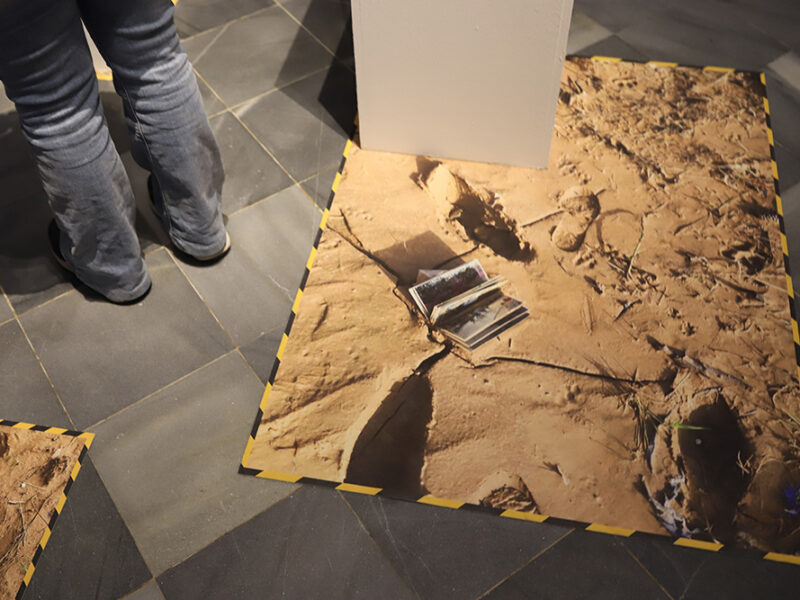
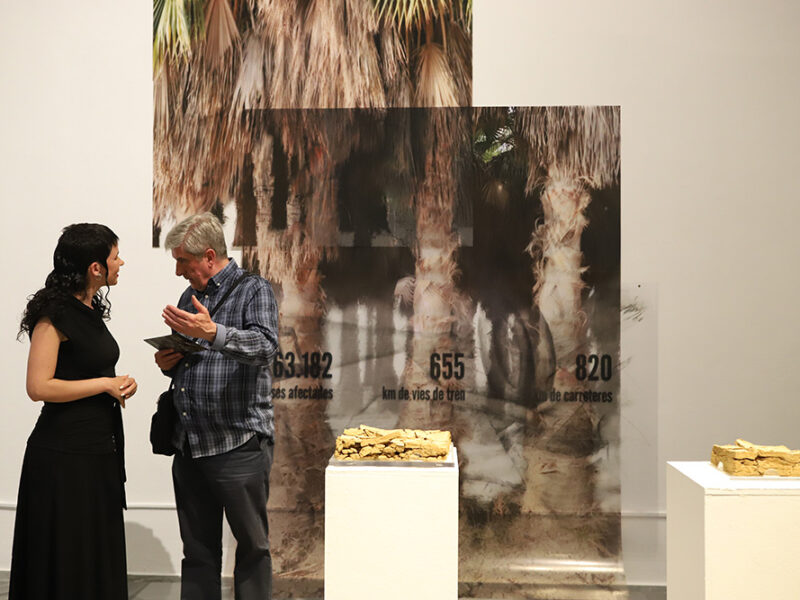
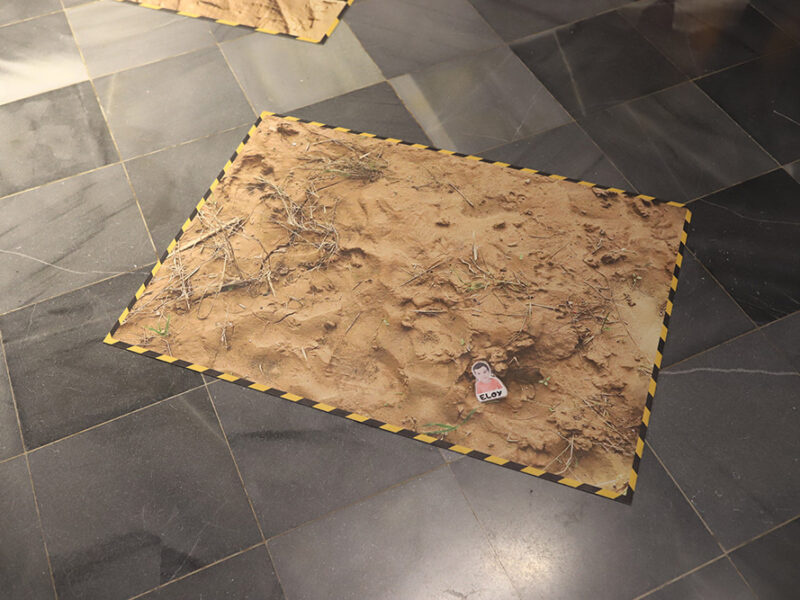
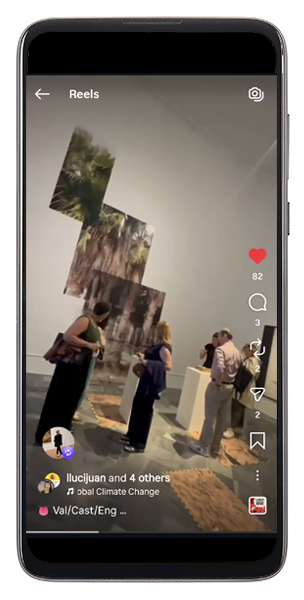
Within this framework, Lluci Juan exhibited Paiporta 2024: memòria, fang i solidaritat (Paiporta 2024: Memory, Mud, and Solidarity), an installation that explored the impact of the flood on the Valencian region through one of her workshops, located next to the Poio ravine. The project combined memory, material documentation, and actual mud from the flood with a critical analysis of the landscape and urban planning models in flood-prone areas.
Paiporta 2024 articulates a perspective that connected artistic practice with the territory and with the material conditions of creation in peripheral contexts—an approach that Lluci Juan had developed in previous projects linked to collective memory and contextual practices.
The installation consists of three pieces that engage in a dialogue with one another:
In Contenció vegetal (Vegetation Retention) and Terra de fang (Clay Soil), the artist explores the importance of natural elements—vegetation, soil permeability, and the structure of the garden—in mitigating the effects of flooding, tying into the debates on urban planning and land management that arose in the wake of the disaster. These pieces depict the agricultural landscape surrounding the studio, which had served as a natural defense against the flood, in contrast to the extent of the damage recorded in other areas.
The third series, Petjades d’auxili, Paiporta (Footprints of Rescue, Paiporta), was made from clay collected directly from the floodwaters and preserved the actual footprints of the rescue dogs that had worked in the area. The work served as a direct witness to the devastation, but also to the outpouring of solidarity and the emotional memory left behind by this extreme event. These pieces had already been exhibited at the Freijo Gallery (Madrid) on the first anniversary of the DANA, as part of a commemorative event that created a space for shared memory and symbolic healing.
The exhibited pieces are supported by the Ministry of Culture of the Government of Spain, with the collaboration of Fine Arts professors Xavi Mas and Carmen Marcos, as well as Sofcar and Tecnan in the consolidation process of Huellas de Auxilio, Paiporta.
Check out all of Nereu Soto’s photos:

This activity was carried out with the support of the Ministry of Culture of the Government of Spain
Colabora: