
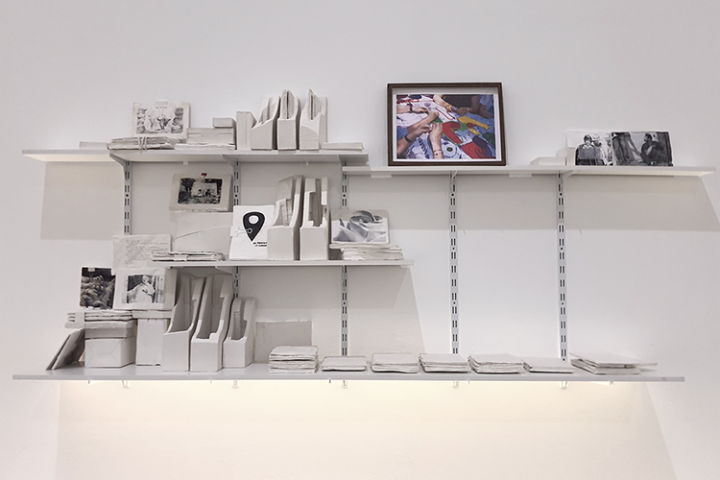
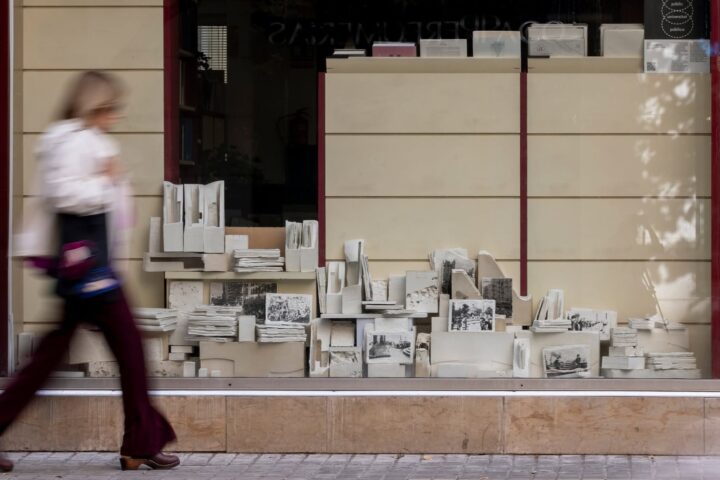
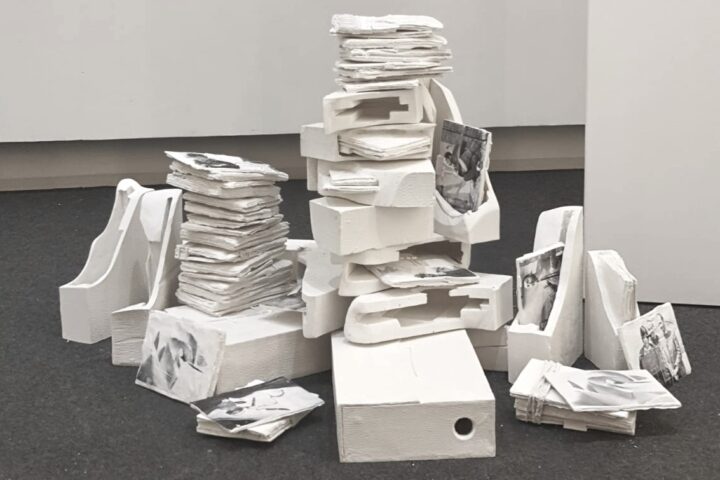
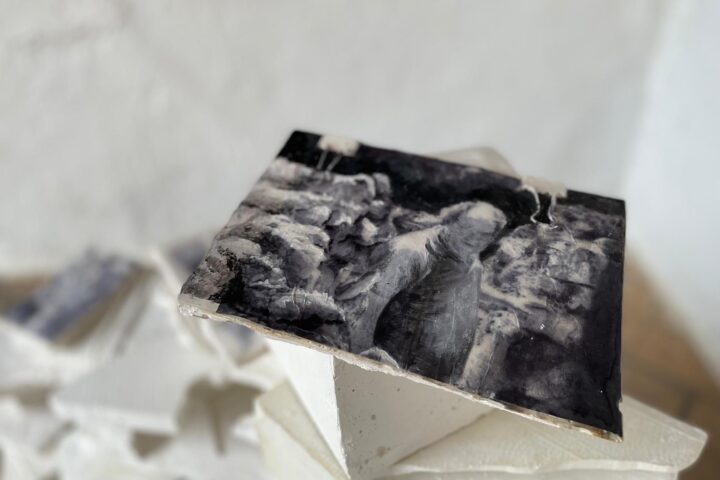
De marges i fites is a set of works that engage in dialogue with the memory of the territory, making visible the silent labor of the hands that have shaped the landscape as a metaphor to pay tribute to all those who create culture from the peripheries, the alterities, and rural spaces: places where large institutions do not reach, but where care and creation persist through community and everyday resistance.
This installation is inspired by the technique of dry stone, an ancestral practice that has shaped the land through walls, huts, and boundaries, without any cement: only gravity, skill, and respect for the environment. The people who worked with dry stone often came from rural communities linked to agriculture and livestock, in contexts of austere living and strong interdependence with nature. Their knowledge was transmitted orally, shared across generations in collective work environments where construction not only served a practical function but also generated a sense of belonging and cultural continuity.
In 2018, the technique of dry stone was inscribed by UNESCO on the Representative List of the Intangible Cultural Heritage of Humanity, highlighting its value as a symbol of sustainability, community cohesion, and rural ingenuity. This recognition honors the wisdom of local knowledge that transcends generations, built in harmony with nature. With De marges i fites, Lluci Juan evokes this legacy and interprets it with a contemporary gaze, turning the fragment into narrative and the boundary into horizon. It is an invitation to contemplate the beauty of precariousness and to understand the landscape as a living cultural construction.
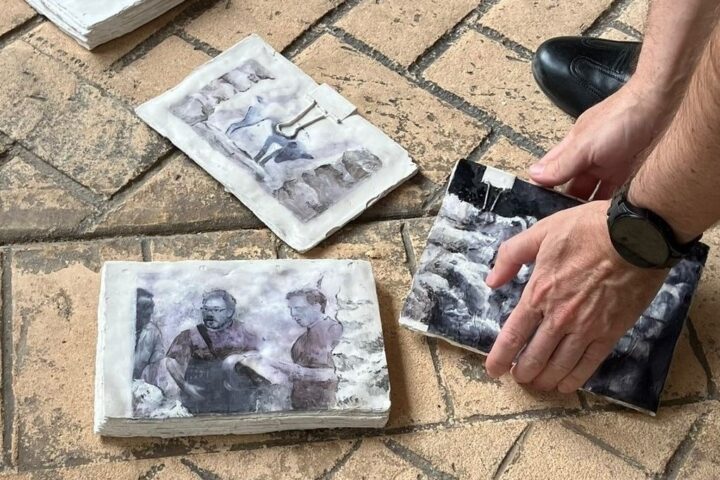
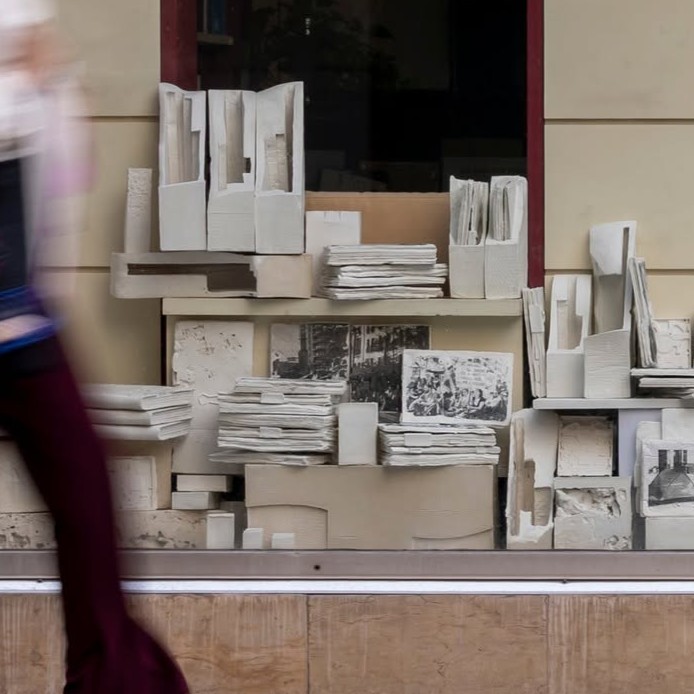
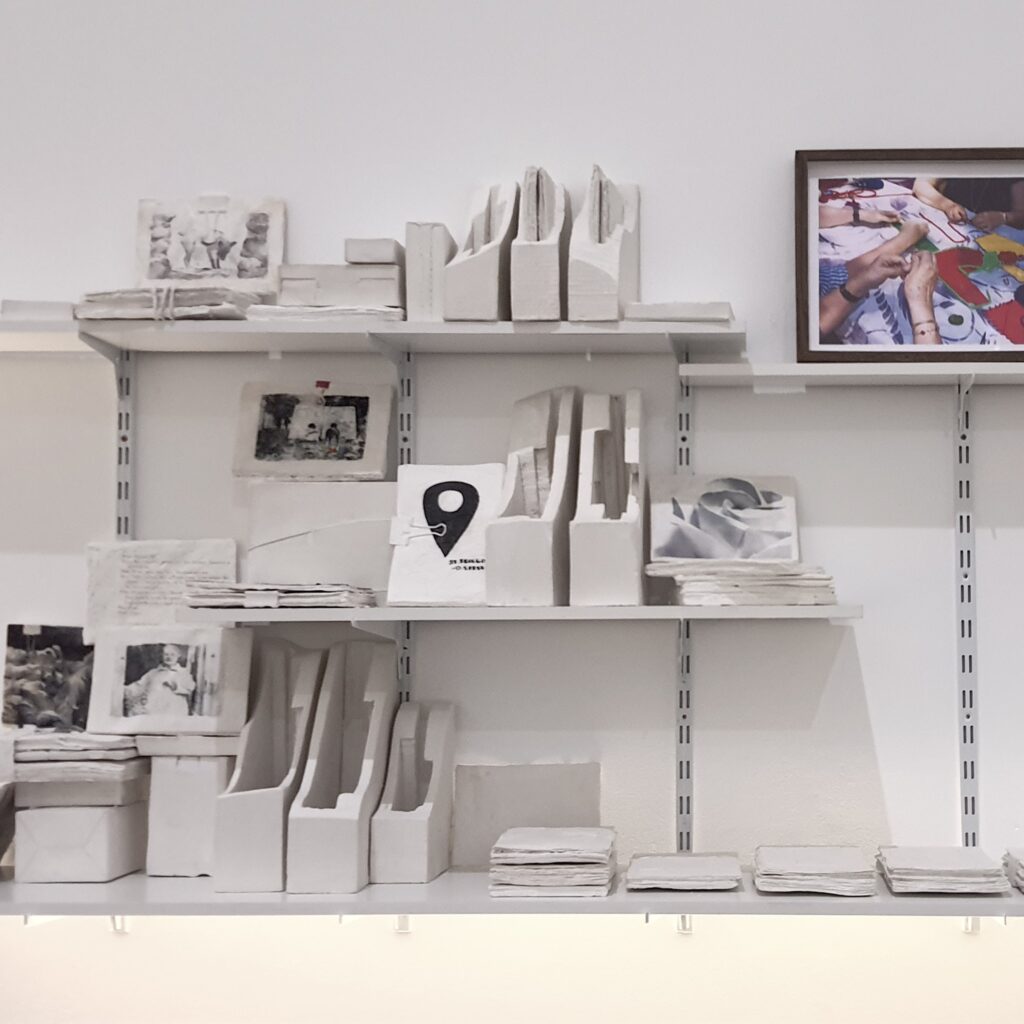
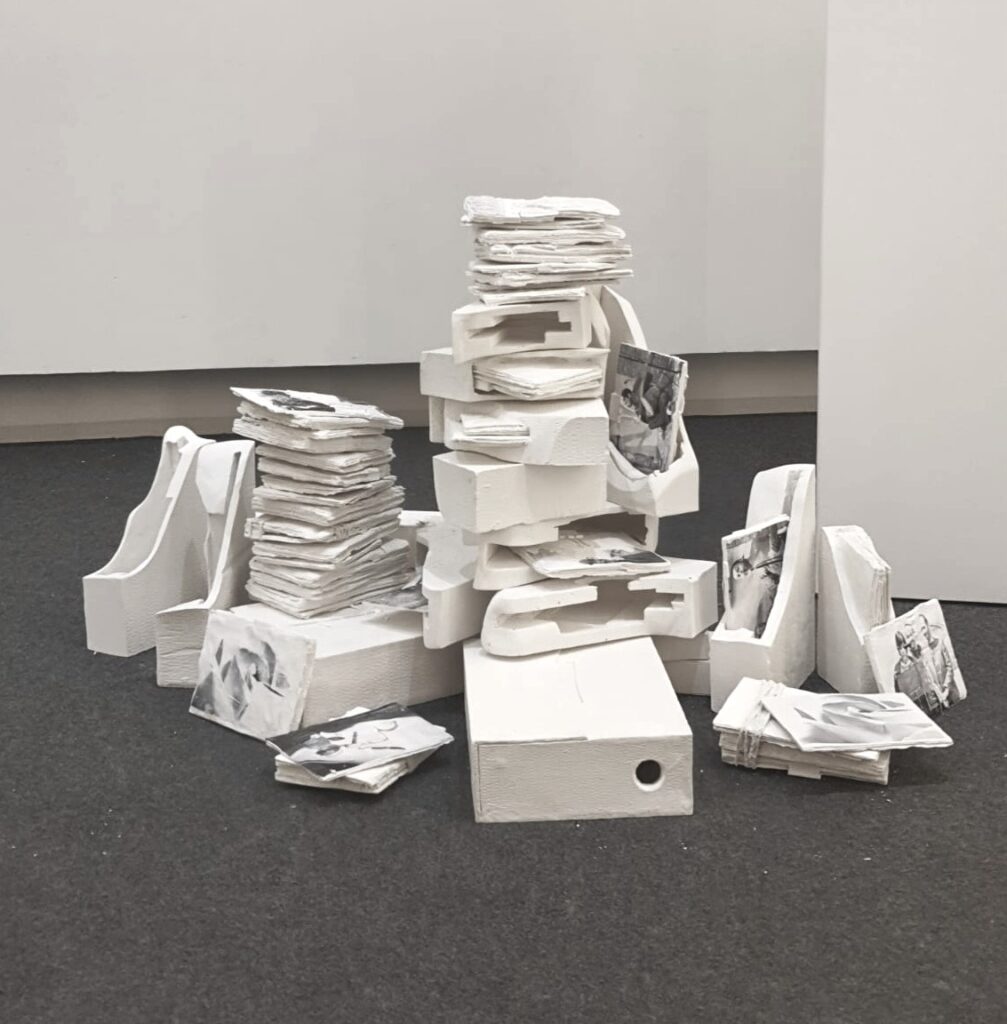
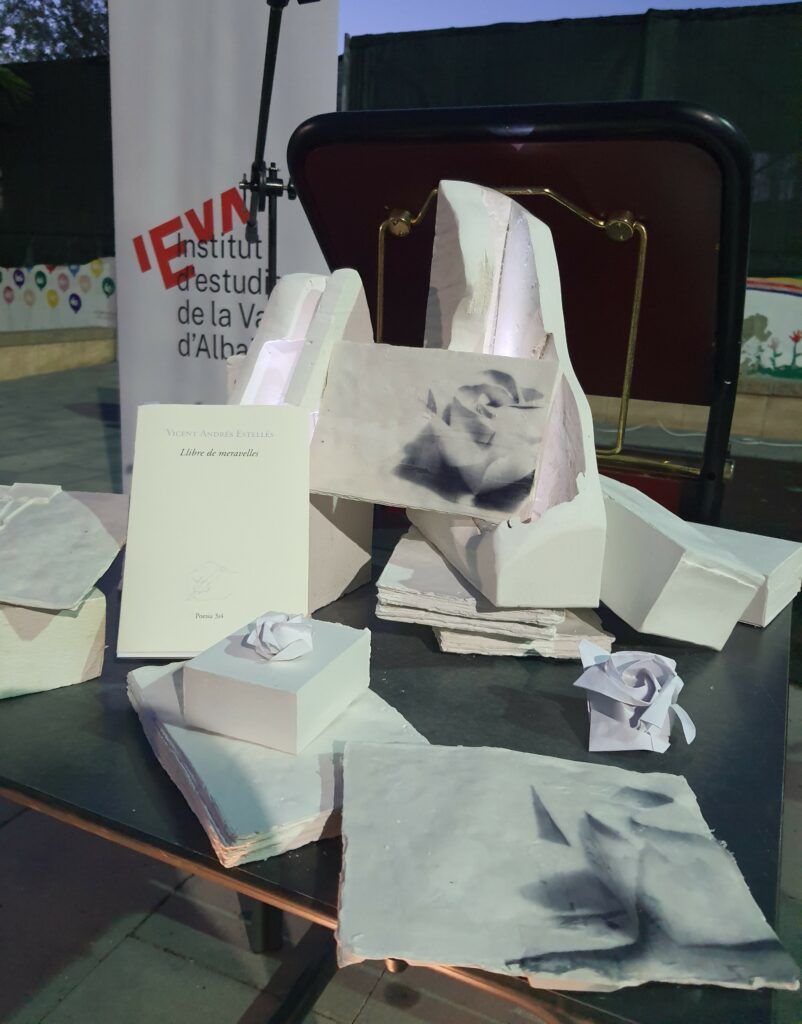
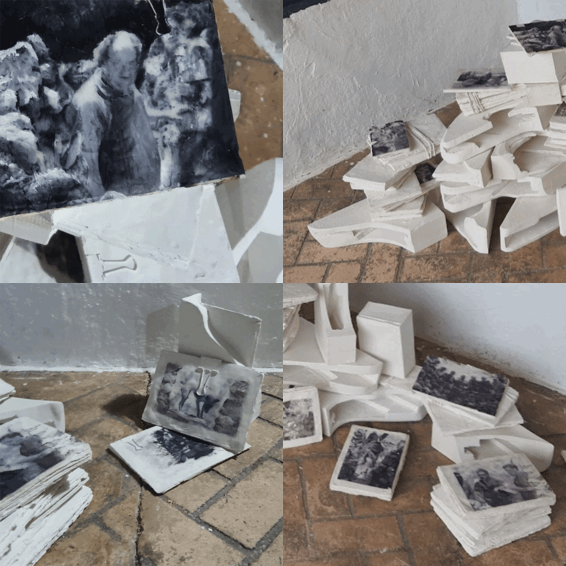
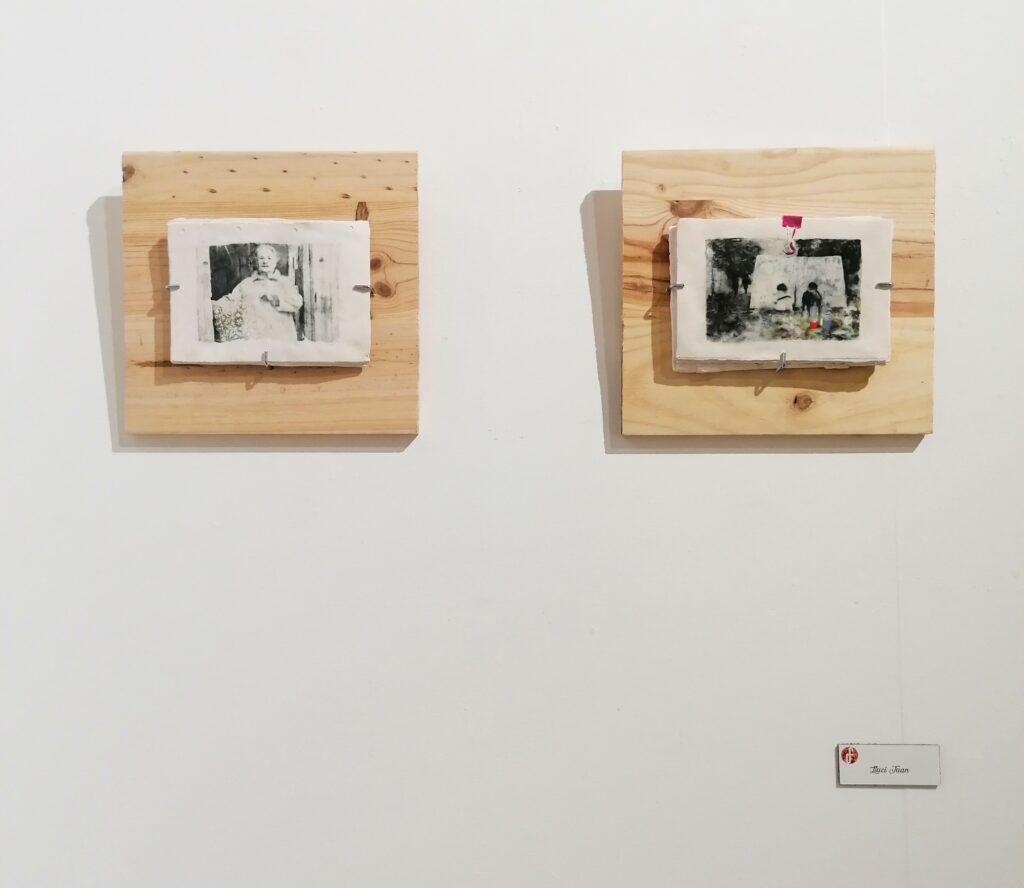
Based on the accumulation of archives generated over years of both artistic practice and activism, Lluci Juan explores the archive-object as a means to construct diverse narratives and experiences. The pieces combine the archival form with photographs and archival elements.
“Although peripheral areas may seem empty of cultural and creative content, the reality is that there are a large number of people working to preserve and disseminate culture linked to the territory. Whether individually or collectively, these people collect, preserve, and create imaginaries that escape globalization and the unifying character of mass culture.
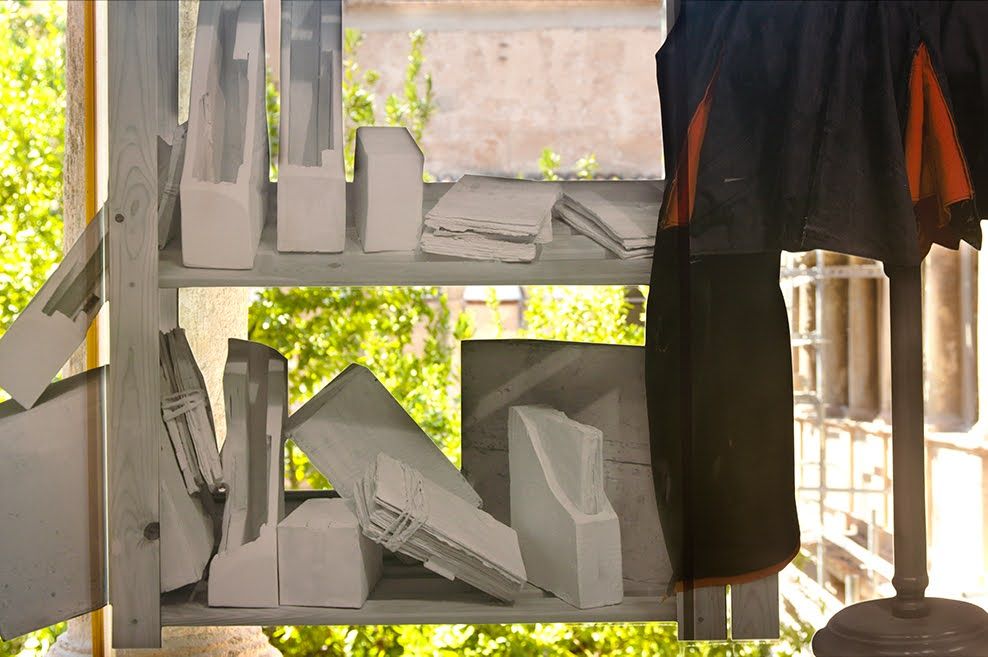
The archives, reproduced in plaster pieces, refer to all those who work for culture from the margins and who, through their actions, provoke change in society, seeking and defending their identity.”
Toni Canet.
La Vila, Ontinyent.
(Reproducció digital)