
(Paiporta 2024: memory, mud and solidarity)
“Paiporta 2024: Memory, Clay, and Solidarity” is an artistic and social initiative that stems from the direct experience of the DANA on October 29, 2024, in Paiporta, the municipality where Lluci Juan has one of her studios. Through clay, the traces, and the stories of the affected area, the project transforms destruction into art and memory into a tool for symbolic healing and collective mobilization.
It is an artistic response to an environmental catastrophe that places the connection between the body, the territory, and memory at its core, addressing both the material and emotional impact of the flood and the precariousness of the cultural sector and the lack of protection for visual artists.
The works are structured around two lines of inquiry that explore the physical and symbolic impact of the DANA—capturing traces, vestiges, and transformed landscapes that trigger memory, mourning, and solidarity—and the structural precariousness of the arts sector, by highlighting the conditions affecting women artists on the margins and connecting cultural discourse with social reality.
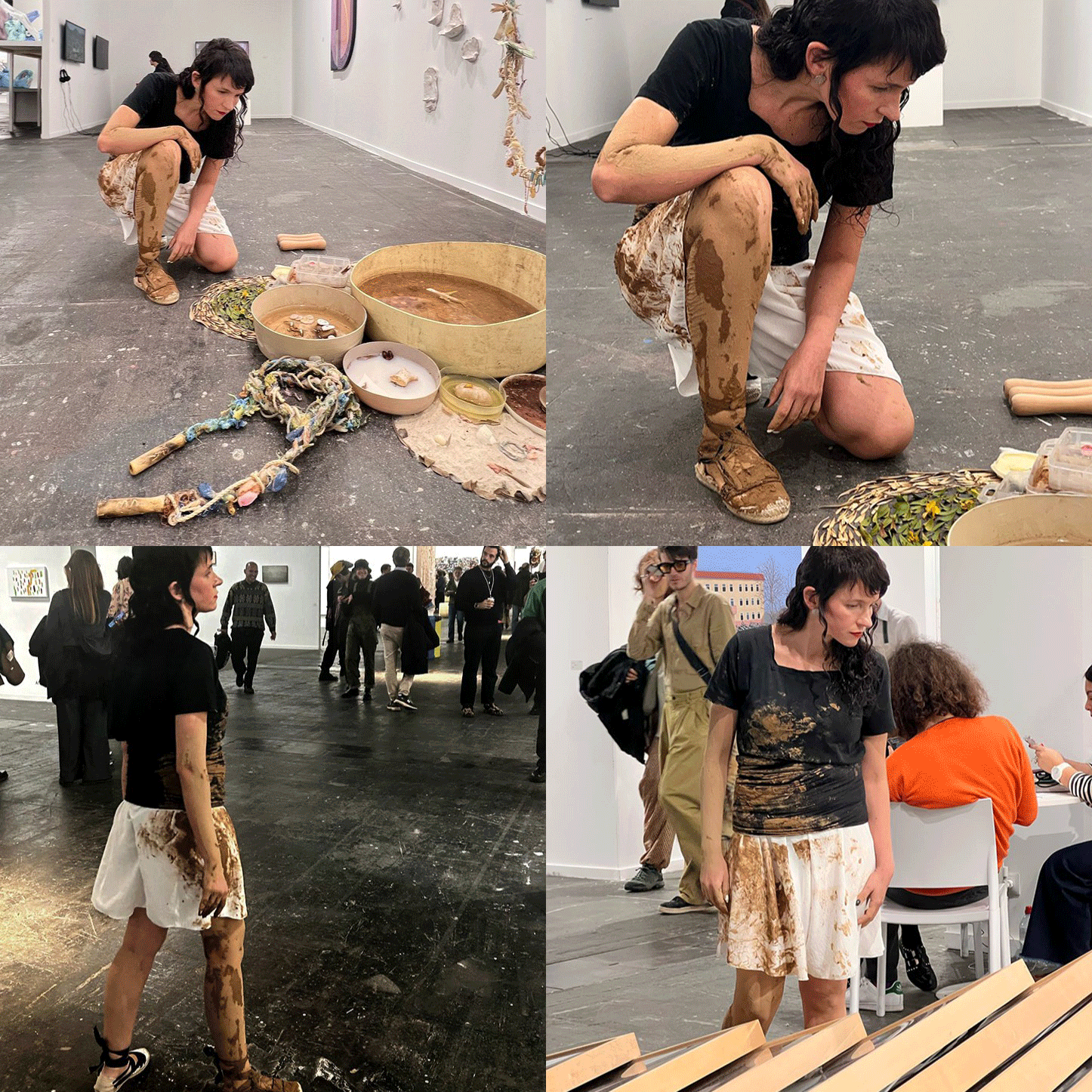
DANA ARCO.
Within the context of ARCO 2025, Lluci Juan brings visibility to the precarious situation experienced by artists affected by the DANA storm, employing flood mud as a material witness to loss, vulnerability, and resilience.
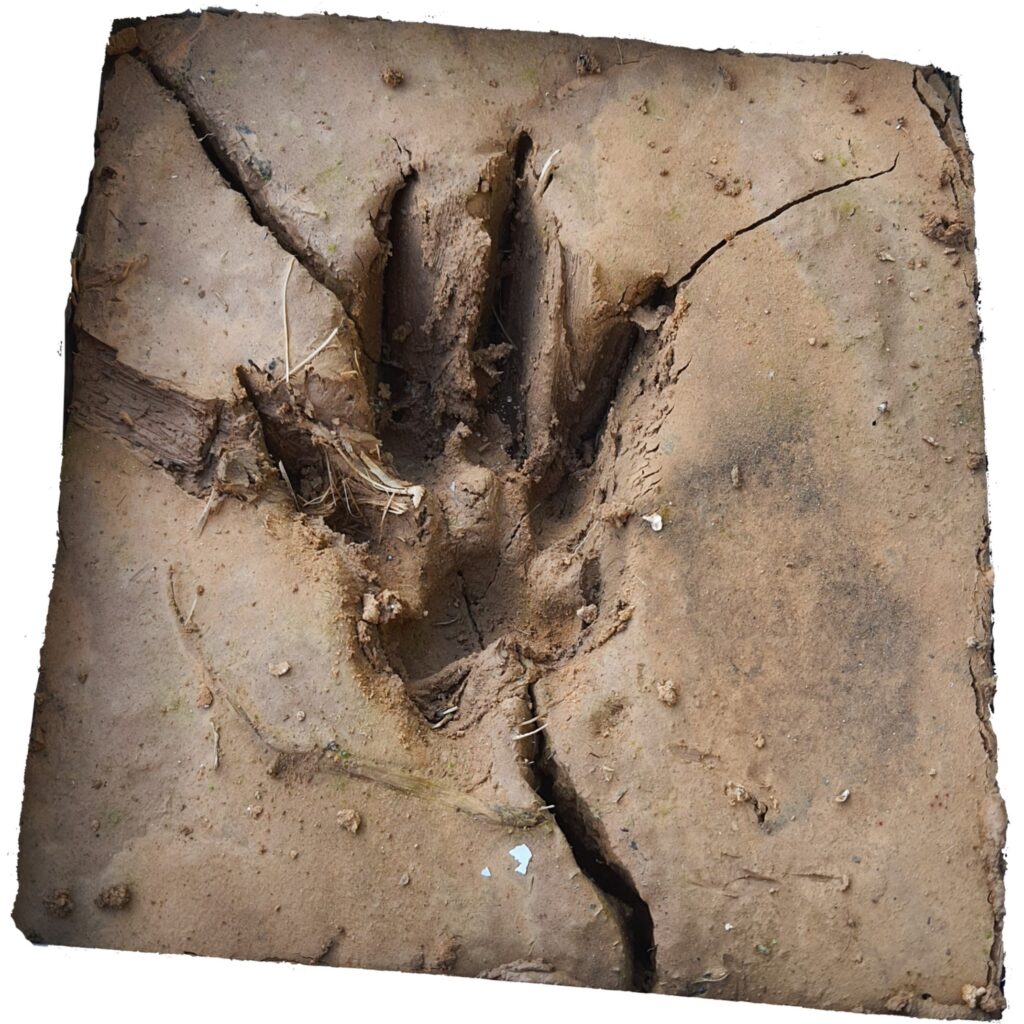
Petjades d’auxili, Paiporta.
(Help calls footsteps, Paiporta)
Works created from silt recovered in Paiporta, the ground zero of the DANA disaster, preserving the footprints left by the search dogs that worked through the aftermath in the search for victims.

Emergència: testimonis de dol col·lectiu.
(Emergency: Testimonies of Collective Mourning)
Collective reading action of victims’ testimonies, reconstructing the events of 29 October in the hours before the alarm sounded.
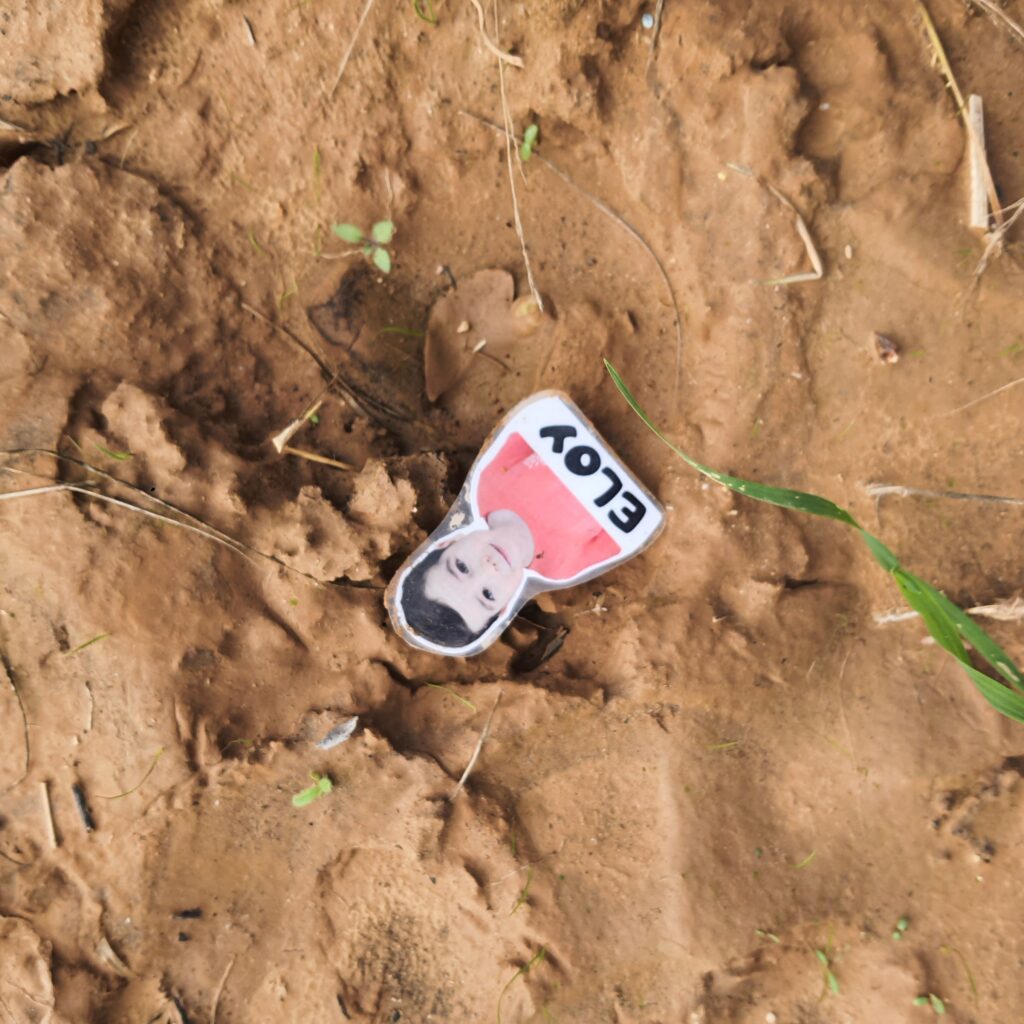
Terra de fang
(Land of Mud).
Walk-through installation recreating the mud-covered ground where tools and domestic objects became trapped, establishing a direct relationship between body, memory, and territory.
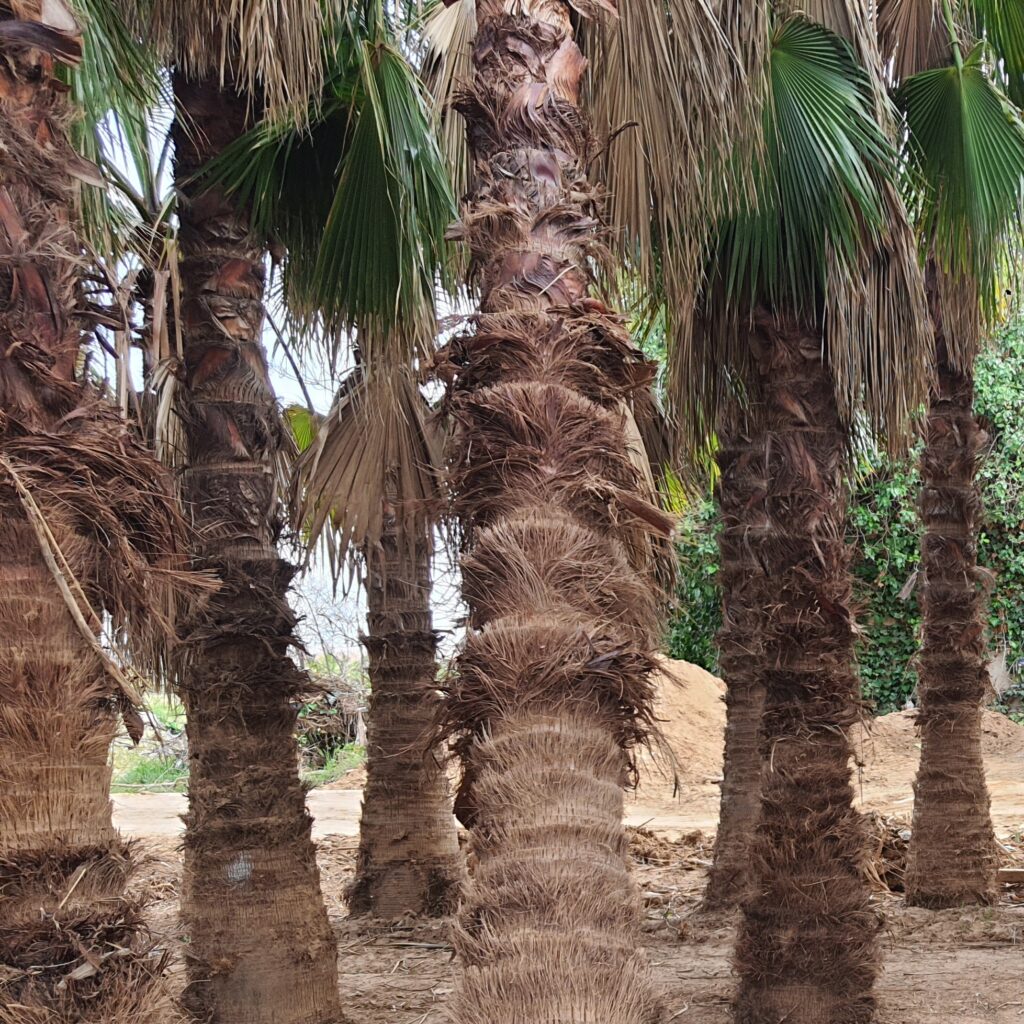
Contenció Vegetal
(Vegetal Containment)
Plastic curtain representing the palm-tree nursery that protected the artist’s plot, stopping part of the furniture dragged along by the floodwaters. A crossing point between the organic and the urban, between containment and resistance.

Gran València
(Greater Valencia)
Engravings that reinterpret the Plan Sur surcharge stamps of 1957 through a contemporary lens, transforming them into a visual memory of the city and its territory.
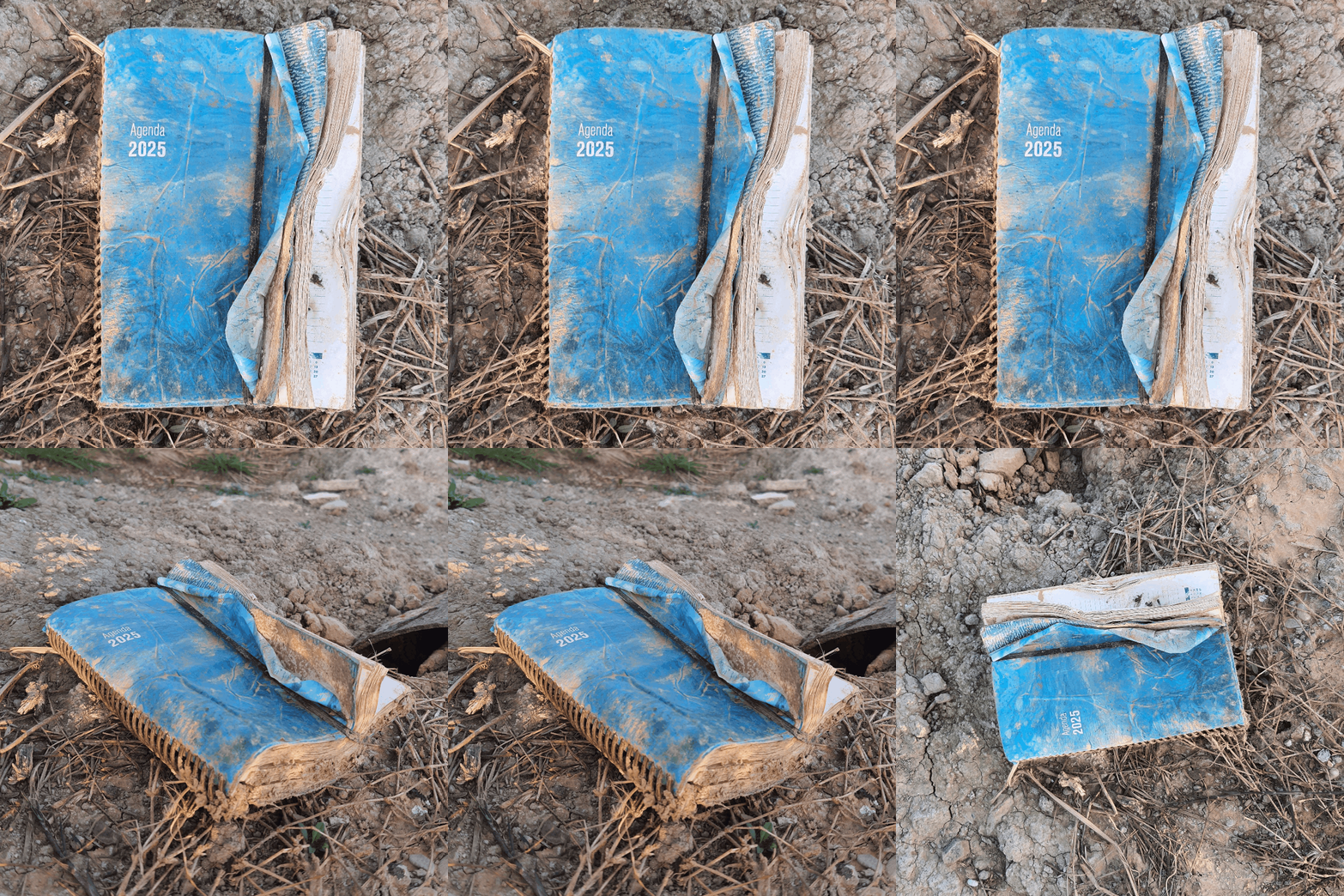
Dietari
(Dietary)
Starting with a diary found at Ground Zero—which had been rendered unusable by the flood—it is transformed into a device for listening and participation, turning a destroyed object into a shared tool of collective memory.

Exhibitions:
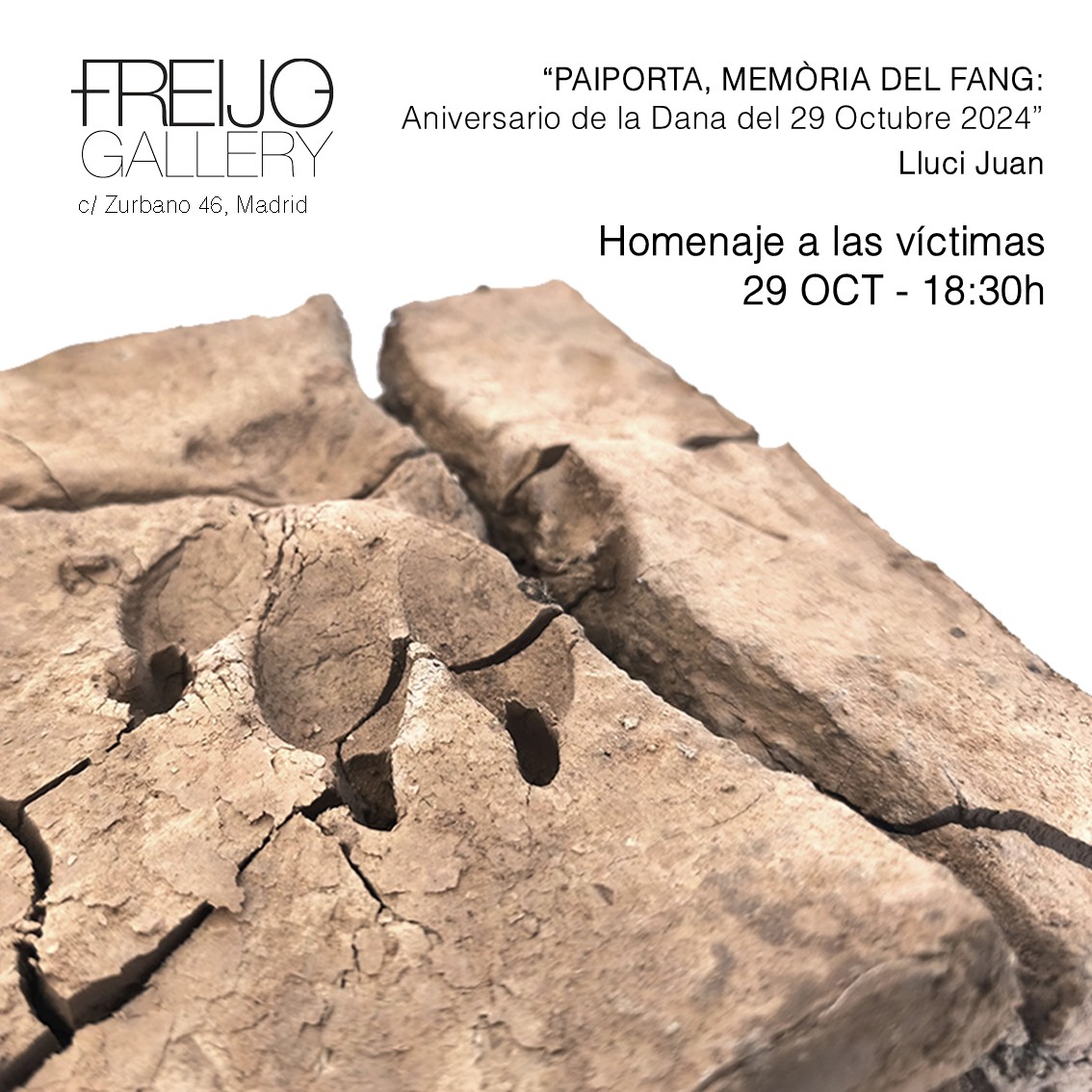
PAIPORTA, MEMÒRIA DEL FANG: (PAIPORTA, MEMORY OF THE MUD):
(Madrid, 29/10/2025)
Anniversary of the DANA Storm of 29 October 2024, featuring works created from mud recovered in Paiporta, bearing the footprints of rescue dogs, and serving as a collective tribute to the victims.
GENEALOGIES DEL TERRITORI: (GENEALOGIES OF THE TERRITORY):
(Valencia, 15/05/2026)
Paiporta 2024 in its entirety: from the footprints of rescue dogs to the crucial role played by nature in softening the effects of the floodwaters..
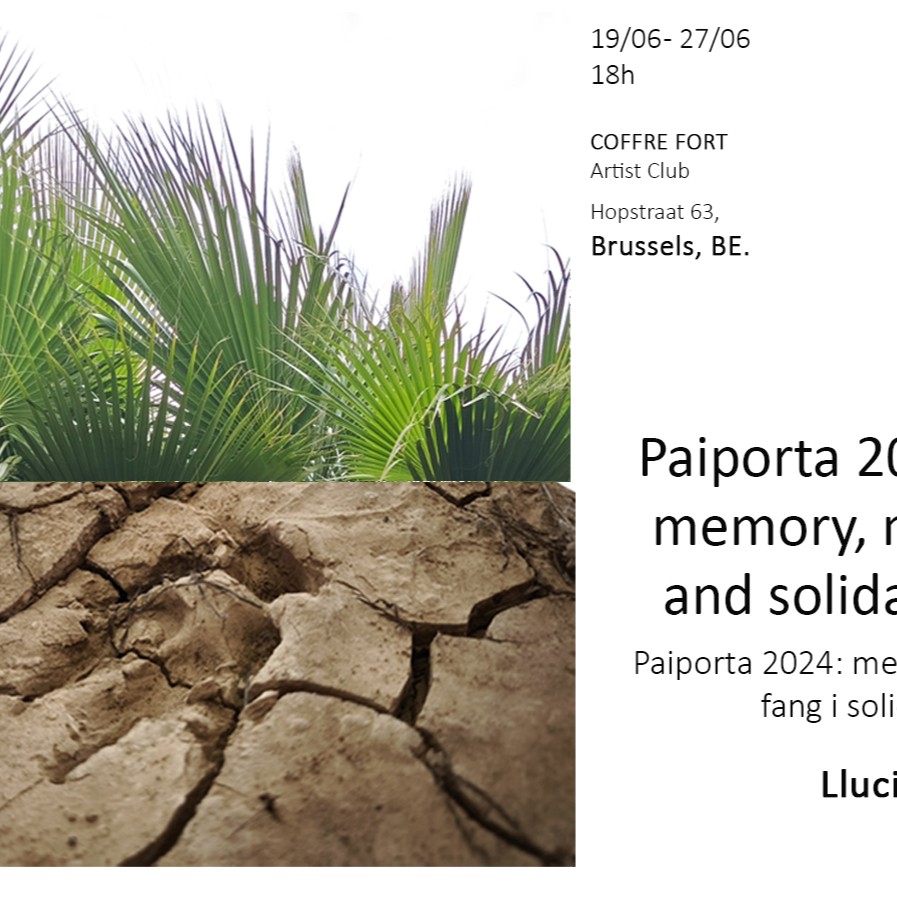
PAIPORTA 2024: MEMORY, MUD AND SOLIDARITY
(Brussels, 19/06/2026)
Connections between territories shaped by common challenges: flooding, DANA events, and other extreme climate phenomena.
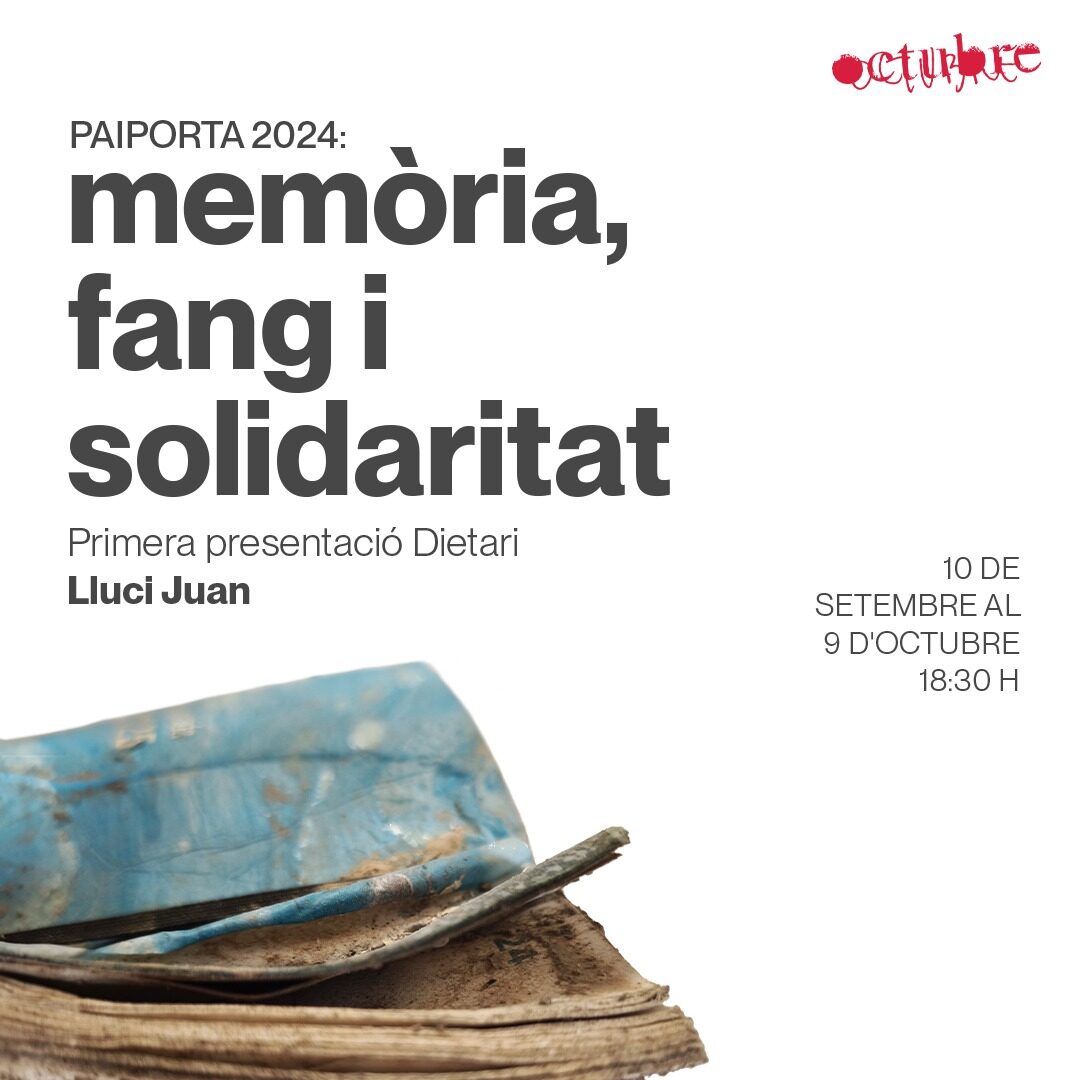
PAIPORTA 2024,
Edició València
(València, XX/09/2026)
The entire installation and a new piece: Dietari. From the footprints of rescue dogs to nature’s crucial role in mitigating the effects of the flood..
Catalogue Production
The full project catalogue will be available very soon: a collective volume bringing together the perspectives of curators, researchers, scientists, critics, and social agents who have accompanied the process.
Includes contributions from:
Isabella Lenzi (curator, critic and researcher) situates the project within the field of contextual art and collective responses to the climate crisis, highlighting the footprint as a political, communal, and active act of remembrance.
Martí Domínguez (Professor, University of Valencia) The Valencian voice of the catalogue. He interprets the footprint of a rescue dog as a symbol of loss and hope, and revisits the historical representation of the gota fría in Valencian art, connecting it with the work of Lluci Juan.
Marta Pérez Ibáñez (art historian) analyzes Lluci Juan’s practice through the lens of the structural precariousness of the cultural sector and collective resistance, reviewing several works that connect territory, gender, and fragility.
Association of Families of Victims of the 29 October DANA Disaster contributes a statement calling for truth and accountability for the 230 victims, while affirming culture as a tool for healing, remembrance, and civic memory.
Rafael Doctor Roncero (curator and art critic) reflects on Petjades d’auxili as a direct presence of the disaster, addressing the footprint, photography, and truthfulness as ethical questions, while denouncing the absence of animals from official narratives.
Xavier Mas-Barberà and Carmen Marcos (researchers and professors at the Polytechnic University of Valencia) describe the consolidation process of Petjades d’auxili, conceived as an intervention integrated into the logic of the artwork itself, grounded in scientific analysis and specific conservation criteria.
Rut Moyano (Local Emergency and Reconstruction Committees – CLER) analyzes the vulnerability of the Valencian territory in the face of climate change and advocates for urban planning adapted to flood risks, while championing culture as a tool for healing, resilience, and community recovery.
Taken as a whole, the catalogue offers a multifaceted view of this body of work, approaching it through memory, science, cultural criticism, civic responsibility, and a territorial reading. It is a document that expands and contextualizes the artwork, while reinforcing the need to rethink the territory we inhabit.
Video
Video
Discover the origins of Paiporta 2024: memory, clay, and solidarity. The video explores Lluci Juan’s workshop and its connection to the DANA, the process of consolidating the clay from the riuà, and the essential role of the natural environment. Through the works DANA-ARCO, Terra de fang (Land of Clay), Contenció vegetal (Vegetation Retention), and Petjades d’auxili, Paiporta (Footprints of Aid, Paiporta), the video reveals the origins and creative process behind this project.
It also delves into the consolidation process of Petjades d’auxili, Paiporta, carried out by UPV researchers Xavi Más-Barberà and Carmen Marcos.
Geographical Context and Personal Background.
These works emerge from Lluci Juan’s direct connection to Paiporta, specifically to the plot associated with the artist and César Navarro. Located in Paiporta, the plot covers more than five thousand square metres and includes an agricultural warehouse of approximately 250 m². It is situated very close to the Poio ravine and several municipal facilities. During the DANA storm, the water dragged away cars, urban furniture, objects from the Halloween fair, and school materials, leaving the space covered in mud and debris. The palm-tree nursery surrounding the plot acted as a natural barrier, allowing the warehouse to withstand the impact, although the site became a critical point in the search for missing persons.
Since 2015, this site has functioned as an artistic studio and storage space for Lluci Juan, reflecting the union between everyday life and creative practice. In 2019, an attempt was made to rehabilitate the warehouse as both a home and studio, but the project was halted due to urban planning restrictions and flood risk. In 2023, after moving to Madrid, Lluci Juan removed her works from the site in order to protect them from possible acts of vandalism—a decision that ultimately made it possible for her works to survive the catastrophe.
In this context, the site becomes a symbol of both fragility and resilience. The experience of the DANA storm revealed the vulnerability of the physical environment, while also demonstrating the capacity of art to endure and transform the memory of place. As in earlier projects such as Les Ferides del Taller (The Wounds of the Studio), this space becomes part of a broader narrative of wounds, testimonies, and creative processes that engage in dialogue with social and territorial realities. Discover more about Lluci Juan’s relationship with this site.
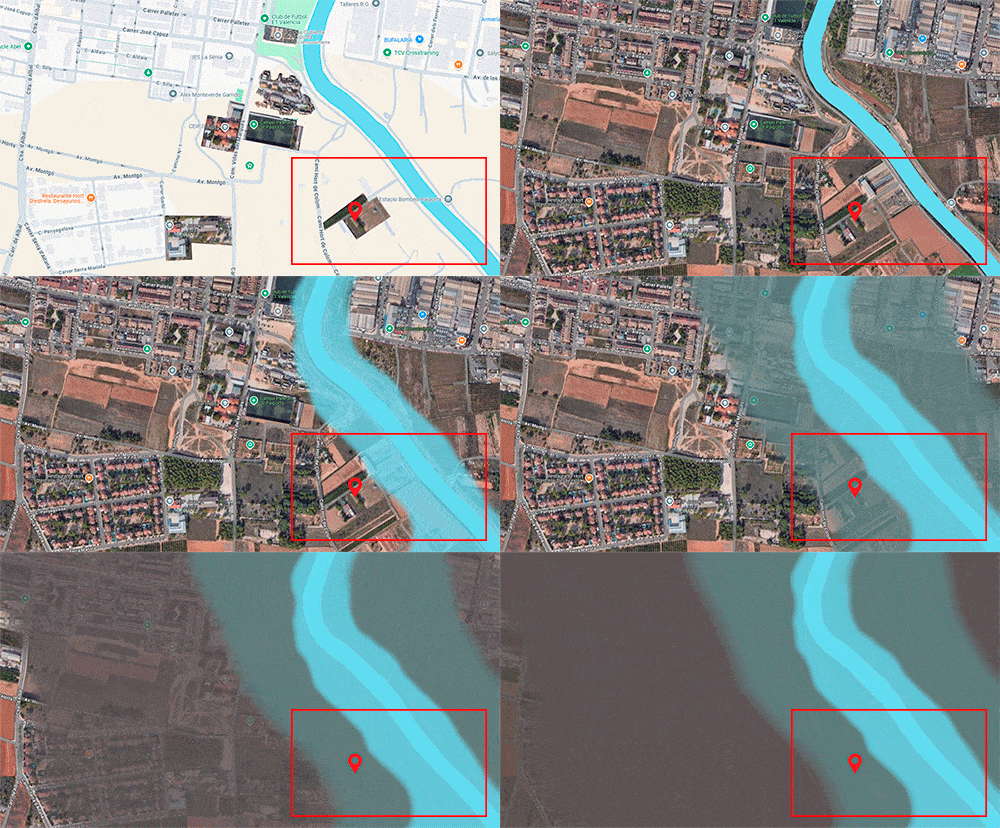
Location of the Paiporta Plot and Nearby Buildings.
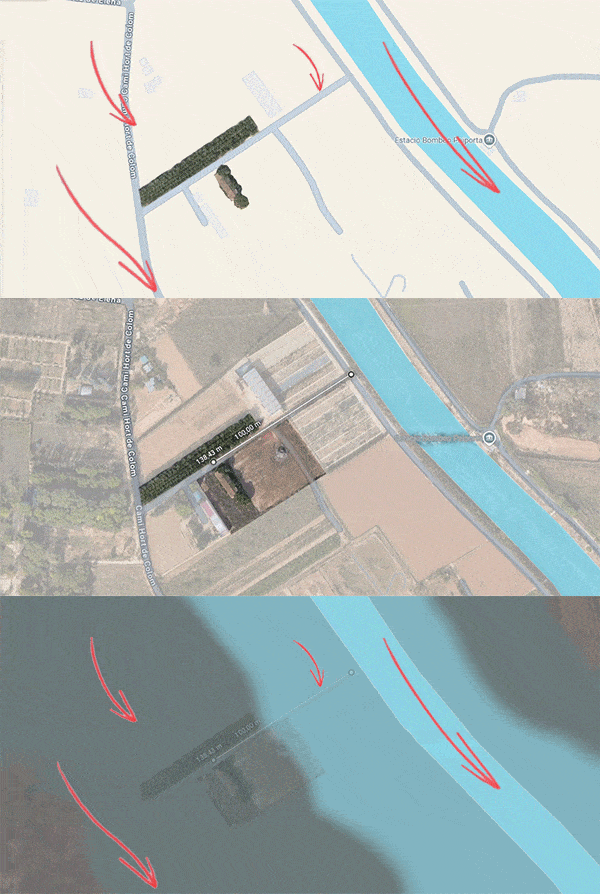
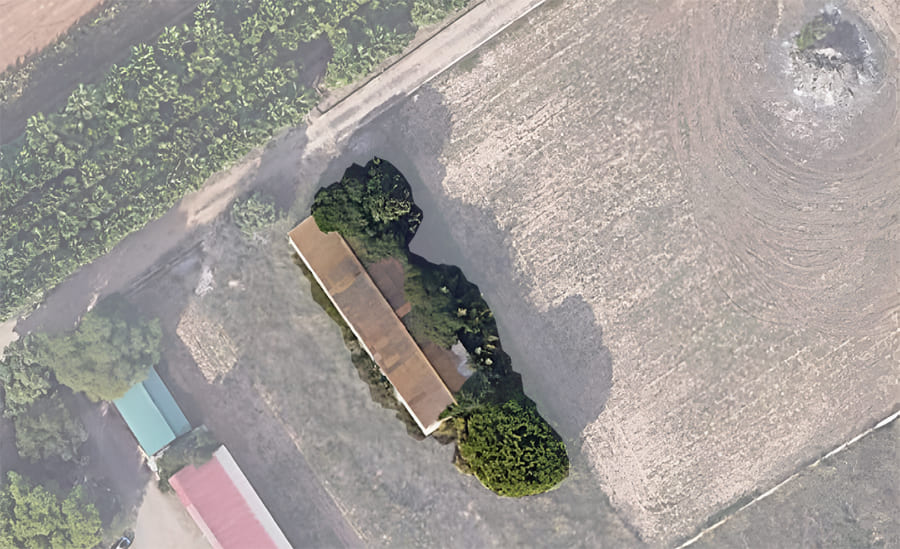
Location of the Plot and Warehouse.
Work carried out with the support of a 2025–2026 Contemporary Creation Grant from the Ministry of Culture:
Social Media Activism.
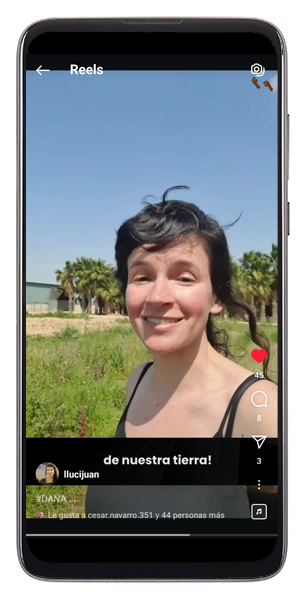
Lluci Juan is bringing visibility to a range of issues that have come to light in the wake of the DANA disaster: the presence of the far right, partisan political manipulation, the role of feminism in the affected communities, and other social and political dynamics that emerged in response to the flood.
Valencian Rat Catcher